After a Nearby Break-In: A Calm, Practical Checklist for Neighbours
A break-in happened on your street. Or nearby. Or you heard about it in a community group, and now you're thinking about your own front door.
This post is for you — not for the victim (though this checklist would help them too), but for the neighbour who is calm enough to think clearly and anxious enough to act.
The good news: a break-in nearby is information, not a prediction. Most forced entries exploit the same vulnerabilities everywhere: weak door frames, unfilmed glass, no exterior lighting. The question isn't whether it will happen again — the useful question is what does your home present as an opportunity right now? And what takes 30 minutes to check?
What You're Actually Dealing With
A nearby break-in is a data point about opportunity, not proximity. Opportunistic forced entry depends on speed and visible vulnerability. If your home takes meaningfully longer to breach than an adjacent unfortified home, it is a less attractive target. That is all you need to know.
Most forced entries target the same two places:
The lock area — When a kick is applied next to the handle at the lock side, that's the weakest point of a standard residential door. This is where the force concentrates, and it's where doors typically fail. A standard residential door frame is fastened with short screws; a kick at the lock point transfers all that force to a small area, which splits or yields. The door swings open in one or two kicks.
The ground-floor glazing — Unfilmed tempered glass shatters on impact into small pieces that clear away from the frame. The opening is immediately available. The hand reach-through that follows is the fastest way into a home.
That's it. The rest — alarm systems, motion lights, landscaping — are multipliers. But the lock area and the glass are where the work happens.
The Next 24 Hours: What Is Worth Your Time
You don't need to buy anything yet. You need a clear picture. Do this first.
1. Walk Your Own Entry Points
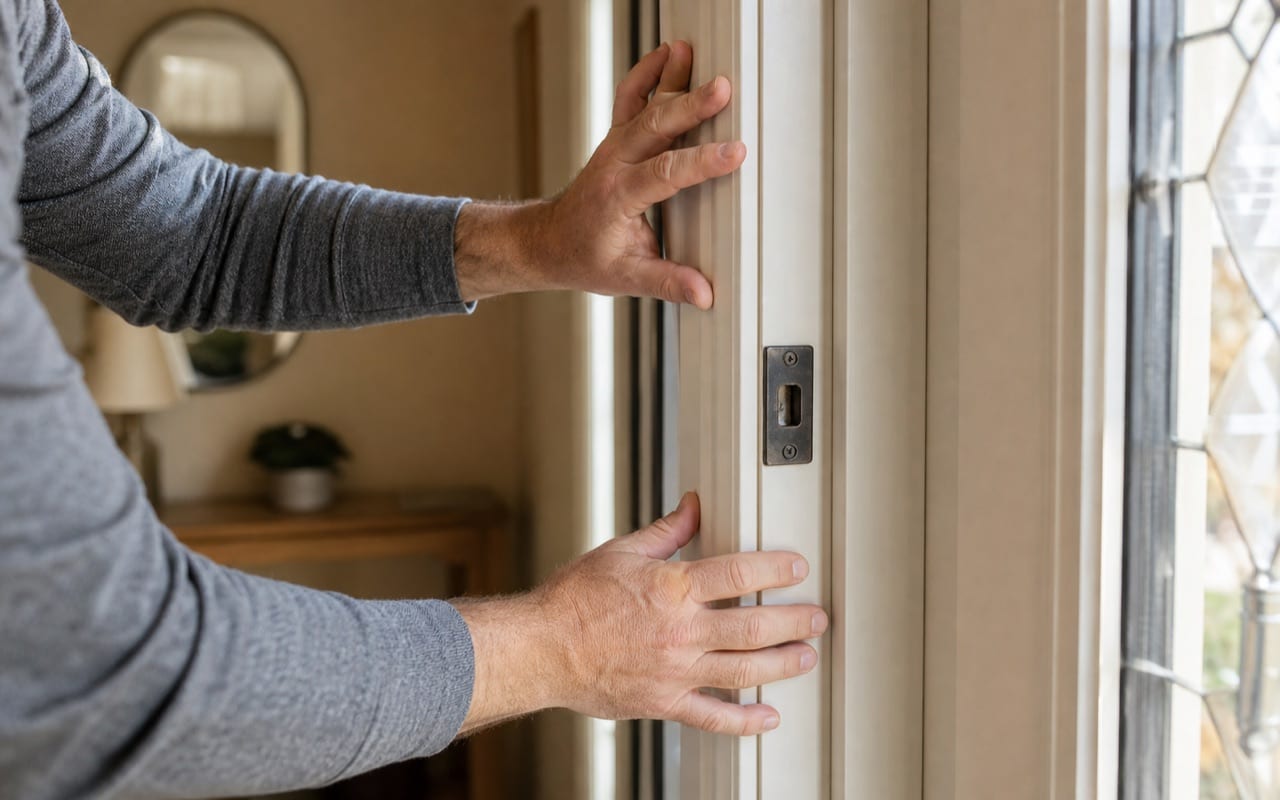
Front door, rear door, patio slider, side-gate entry if present. Push on the strike-plate side of each door (the side with the lock). Does the door shift in the frame? Can you move the door an inch or more?
Standard residential hollow-core frames can feel solid from the outside but are not anchored into the structural stud at the lock side. If the door moves when you push, your strike plate is not doing the job. That's your #1 priority.
2. Test Every Ground-Floor Window
Check every latch. Tap the glass gently with your knuckles. Single-pane glass without film offers minimal resistance to a quick strike. Note which windows are visible from the street and which are hidden from neighbours. Ground-floor windows visible from the street are the first targets.
3. Check Your Exterior Lighting
Walk the perimeter at dusk. Dead bulbs, lights on timers rather than motion sensors, and dark side passages are worth fixing before anything else. Motion-activated lights don't prevent entry, but they remove the cover of darkness and raise the effort. Dead bulbs and dark passages are invitations.
4. Notify Your Community Channel
Neighbourhood Watch group, the building's condo manager, a local Facebook group, or Nextdoor. A timely heads-up to neighbours is more valuable than any single product. Shared information means shared awareness.
5. Test Your Alarm (If You Have One)
Confirm it triggers. Confirm the monitoring company receives the signal. Note what the verbal code and response procedure is. If you don't have monitoring, note that an unmonitored alarm is deterrence (the noise and the sign), not response. Monitored alarms dispatch police; unmonitored alarms do not. If you have one, you should know the difference.
That's it for 24 hours. A calm 30-minute physical inspection of your own home is more useful than two hours of reading crime forums.
What Not to Do
Don't panic-buy cheap add-ons. Surface-mounted locks from a hardware store, stick-on door alarms, and doorknob reinforcers that attach over the existing frame without replacing the structural anchor are security theater. They make you feel like you did something, but they don't address the vulnerabilities above.
Don't assume the incident was targeted. Forced entry is about opportunity and speed, not about the resident's demographics, age, or visible wealth. Write this down and remember it: the break-in happened because the home presented an opportunity. That's all.
Don't post unverified details online. If you're not 100% sure about the incident details, don't share them in community channels. It contributes to misinformation and can complicate the police investigation.
Don't assume nothing will happen because nothing has happened before, and don't assume something will happen because something happened nearby. Neither inference is useful. Both keep you from thinking clearly. Focus on what you can actually control: the physical condition of your entry points.
What a Hardened Home Actually Buys
The goal of home fortification is not to make entry impossible. It's to add delay, noise, and visible resistance.
Forced entry depends on speed. If breaching your home takes meaningfully longer than breaching an adjacent unfortified home, yours becomes a less attractive target. An opportunistic intruder will move on to the easier option.
Two physical layers matter most:
The glazing (windows and patio glass):
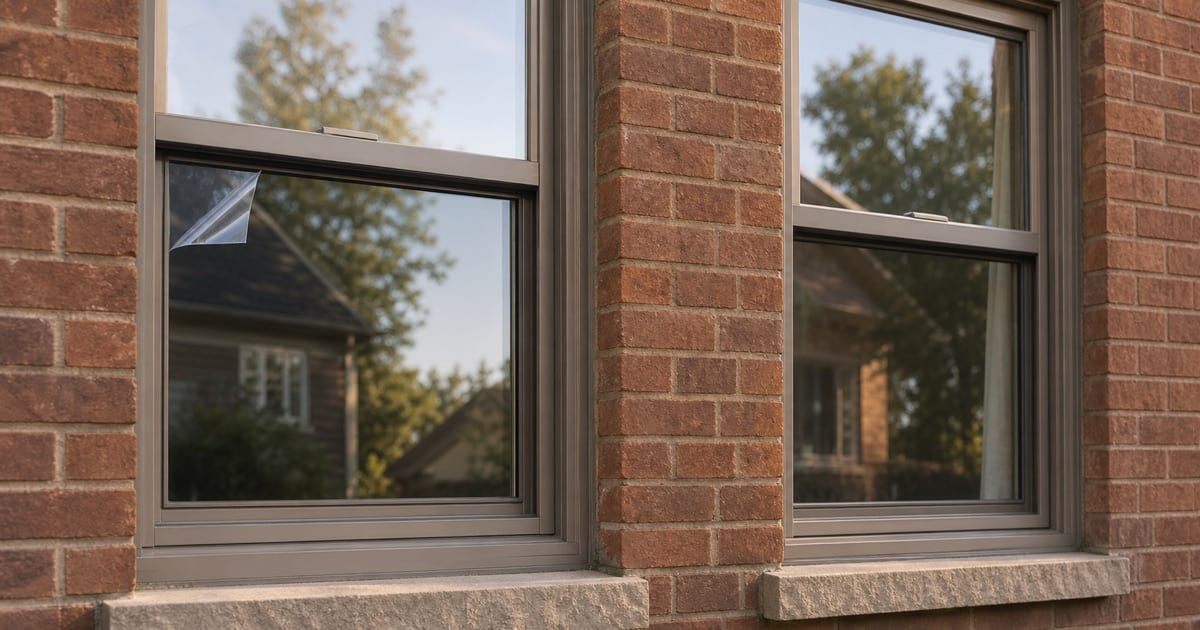
Unfilmed tempered glass shatters on impact into small pieces that fall away from the frame. Security window film, when applied to glass, holds the shattered pane together when struck. The glass may crack, but it stays bonded to the frame. The reach-through is no longer available.
Our security window film comes in two interior options: 8 mil (standard) for balanced protection and cost, or 14 mil (maximum strength) for the strongest protection. Most homeowners choose to double film — applying film to both the interior AND exterior of the same pane. The exterior film layer is 7 mil and is always recommended (budget permitting) for maximum protection and delay. Double filming from both sides adds significantly more delay to a forced-entry attempt.
The door frame:
A standard residential door is typically attached to the rough opening with short screws. A kick applied near the dead bolt transfers force to a small area of wood. The jamb splits or yields. The door opens.
Frame reinforcement distributes that force across structural studs, adds multi-point locking, and uses extended fasteners to anchor the frame into the structural stud. The result: the door resists a kick, the strike plate doesn't yield, and entry takes significantly longer.
Both of these are delay measures. Write: "adds meaningful resistance," "takes significantly longer to breach," "buys time." Do not write "prevents break-ins" or guarantee against entry. That's not honest.
If you decide to harden your home, here's what I'd prioritize:
- Fix the door frame on your primary entry — This is the #1 forced-entry target.
- Apply film to ground-floor windows — Especially those visible from the street.
- Add motion lighting — Rear and side passages.
- Keep your alarm monitored — If you have one.
All of this can be assessed in one visit by a professional. That's the next step, if you want it.
Where Security Window Film Fits In
Security window film is applied to existing glass — no window replacement required. On impact, the film holds the shattered pane together. The glass may crack, but the pane stays in the frame. The hand-reach-through that follows a quick glass break is no longer available.
Film options:
- Interior: Choose 8 mil (standard protection) or 14 mil (maximum strength)
- Exterior: 7 mil (always recommended for best protection)
- Double filming: Many homeowners apply film to both interior and exterior of the same pane for maximum delay
Applies to: ground-floor windows, patio sliders, sidelights beside front doors, basement hopper windows, rear-yard glazing.
Installed professionally in one visit. Nearly invisible after application. Read more about how it works.
Where Door Fortification Fits In
ARX Guard door fortification directly addresses where doors actually fail: the lock area where you kick next to the handle.
Here's how it works:
- An upper component attaches to the structural frame above the door (the header)
- A lower component attaches to the threshold (the piece directly below the door)
- A hockey-stick mechanism with a latch attaches directly to the door, tying the entire door into the frame for maximum strength
- Works on almost all standard residential doors (including oversized doors)
- Optional: A second ARX Guard can be installed below for additional strength
Performance tested: At our Oakville testing facility, a door with dual ARX Guard units withstood 5,000+ pounds of pressure. A standard residential kick applies about 420 pounds. The difference is significant.
Available in multiple colors to match your existing hardware or door finish.
Front door, rear entry door, and garage-to-house interior door are the primary candidates.
Learn more about front-door risk factors.
The Free Assessment: What It Covers
If you decide you want a professional look, a Clear Guard technician will visit your property — typically 30–45 minutes.
They walk each entry point, test the door frame resistance, check glass size and condition, and note exterior lighting and sightline issues. At the end, they provide a written summary and quote.
The assessment is not a sales pitch. If your property doesn't have the vulnerabilities addressed by window film or door fortification, we'll say so. If you only need motion lighting and a secondary lock bar, that's what we'll recommend.
Frequently Asked Questions
What should I do in the 24 hours after a break-in in my neighbourhood?
Walk your own entry points (front door, rear door, patio slider), check ground-floor windows, check exterior lighting, notify your community channel, and test your alarm if you have one. That's the checklist above. It takes 30 minutes.
Does a nearby break-in mean my home will be targeted next?
No. Forced entry is about opportunity and speed, not about proximity to a previous incident. Inspect your own entry points and compare them to what's visible and available from the street. That's the relevant question.
What is the most effective thing I can do to harden my home quickly?
Address the frame anchor on the primary entry door (front or rear) and apply film to ground-floor glazing. Both can be assessed in one visit. These two layers address the fastest forced-entry vectors.
Ready for a Professional Assessment?
If you're not sure which entry points on your property are most exposed, a Clear Guard technician will walk through them with you. Assessments are free, on-site, and take about 30 minutes.
Book a free home assessment. A technician visits, walks every entry point, and tells you exactly what the exposure looks like — and what would close it. No obligation. Written quote within 48 hours.