How Security Window Film Works: A Visual Guide
Most homeowners assume that breaking glass means an intruder is in. Security window film changes that equation by holding shattered glass together, blocking the opening, and forcing an attacker to spend critical time defeating the film itself. Here is exactly what happens at the moment of impact and why it buys you time.
The problem: why standard glass fails so quickly
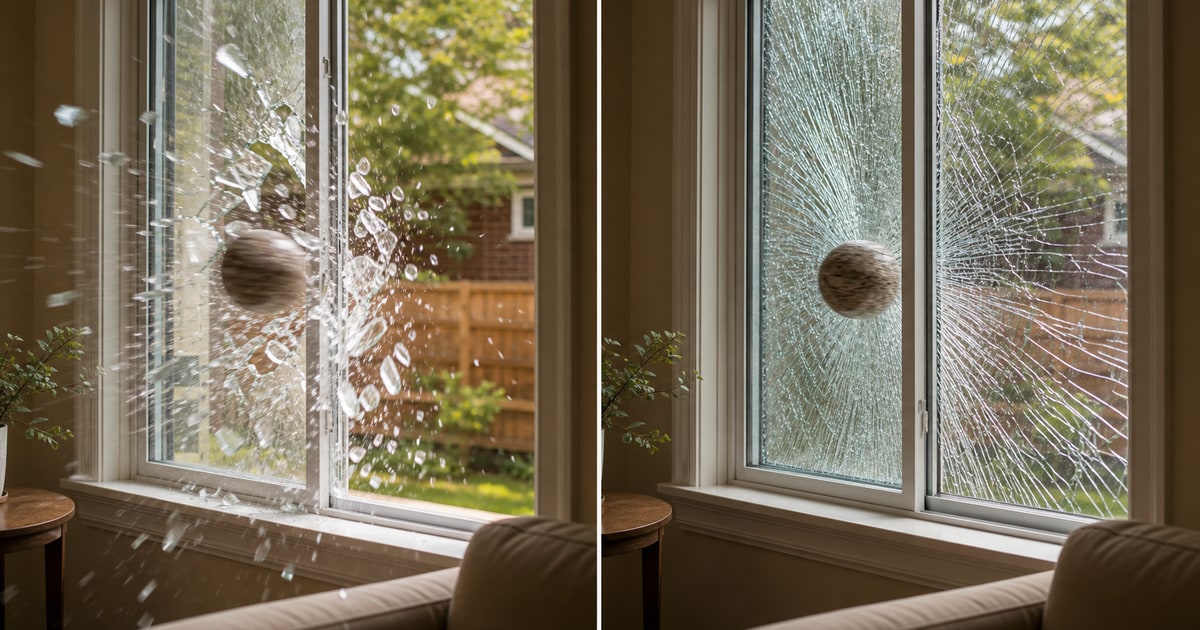
A standard residential window has no protection between the intruder and entry. When glass is struck with force—a rock, a hammer, a boot—the pane shatters into fragments. On impact, the glass breaks free from the frame and falls or clears away within seconds, leaving an open hole large enough for a hand, arm, or full body to pass through.
Once the opening is clear, entry is immediate. An intruder can reach through and unlock a latch, turn a deadbolt from inside the frame, or simply climb through the gap. The time from impact to reach-through on a standard pane is measured in seconds—often fewer than five.
There is no delay. No alarm response time. No moment for an occupant to react. The glass fails, the space opens, and entry happens.
What security film does at the moment of impact
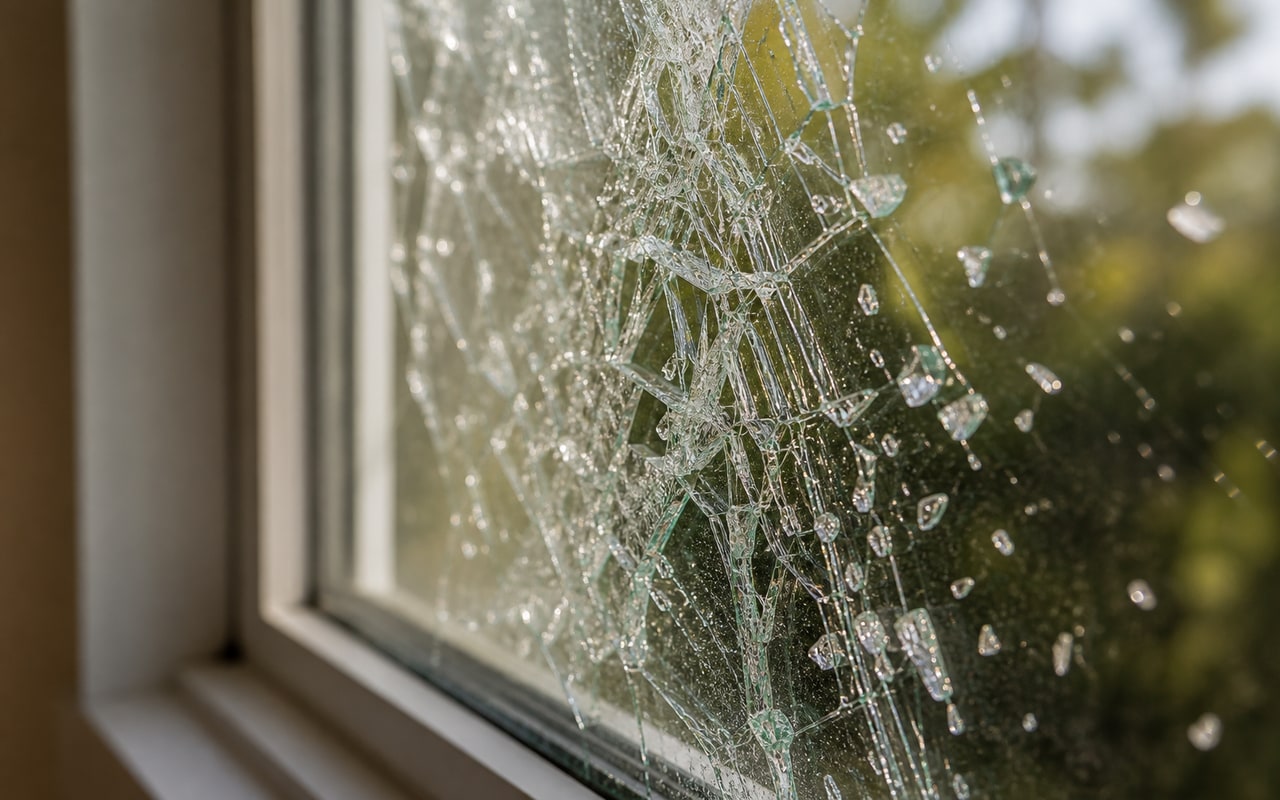
Security window film is a polyester-based adhesive layer applied to the interior surface of your existing glass. On impact, the glass still shatters—the film does not prevent breaking—but the adhesive bonds are engineered to hold the fragments together.
The result: instead of a clear opening, the pane becomes opaque, spider-webbed, and stuck to the film backing. The fragments remain bonded to the adhesive layer beneath, creating a barrier that blocks the passage. A hand cannot reach through. A body cannot climb through. The opening is still blocked.
Visually, this is the critical moment. The glass breaks, but it does not clear. The pane remains partially in the frame, held in place by the film's adhesive system. The space that would have been an entry point now presents a solid, fragmented obstacle.
This behavior is the core mechanic: film holds shattered glass together. It is tested and documented by film manufacturers and observed consistently in residential installations.
The reach-through problem solved
Standard glass creates a simple equation: break—clear—reach through. A filmed window changes it entirely.
Unfilmed glass: Impact → pane clears → entry in seconds.
Filmed glass: Impact → film holds → cannot reach through → must manually defeat the film → significant additional time.
To get past a filmed window, an intruder must now manually tear, peel, or force the film away from the frame and the glass. This process is not quick. It requires repeated effort, makes noise, and takes minutes rather than seconds.
Those minutes are critical. During those minutes:
- An alarm sounds and is heard by neighbors or a monitoring service
- A resident reaches a phone and calls 911
- A family moves to a safe room with a locked door and a second exit
- A retreat plan, if practiced, goes into effect
Delay is the mechanic. Delay plus alarm plus a retreat plan is the three-layer approach to home security.
Which windows film protects most effectively
Security film is most effective on the glass surfaces that present the clearest exposure and highest accessibility. Consider these entry points:
Ground-floor windows are the most direct path for an intruder. Any glass at eye level or below, facing a street, yard, or alley, should be a priority for film.
Patio sliders and glass doors present a large surface area and mechanical vulnerabilities. Patio-slider latches are not designed to resist repeated forcing, and the glass is often the first point of failure. Film here prevents the quick, quiet break-and-reach.
Sidelights beside front doors are often overlooked by homeowners but are within arm's reach of a deadbolt or door handle. Decorative sidelight glass is typically single-pane and thin. Film on sidelights solves a geometry problem: the glass is beside the lock, making reach-through a viable attack vector.
Basement hopper windows and below-grade glass are often single-pane, visible only from the foundation level, and easily missed during a home assessment. Their below-grade location makes them seem less vulnerable, but they often fail first under impact.
High-consequence second-floor windows in homes with balconies, fire escapes, or easy roof access warrant film. These are harder to reach, but determined intruders may use external routes.
A Clear Guard technician can walk your property, identify which windows present the highest exposure, and show you exactly what a filmed window looks like from inside. Assessments are free and take about 30 minutes.
What film does NOT do
It is critical to understand film's limits. Film is one security layer, not a complete solution.
Security film does not prevent glass from breaking on impact. The glass will still shatter. You will still see visible damage and an opaque, fragmented pane.
Film does not make glass unbreakable. A sufficiently determined intruder, given enough time, can eventually defeat the film and reach the opening. Film is not a guarantee—it is a delay.
Film does not eliminate the need for other security layers. An alarm system, a retreat plan, a reinforced door, and good exterior lighting all work together with film to form a complete defense. Film alone is insufficient.
Film does not eliminate the need for awareness and preparation. Good exterior lighting, the ability to see who is at your entry points, and a family plan for how to respond to a security event are foundational. Film amplifies their effectiveness.
Installation, appearance, and longevity
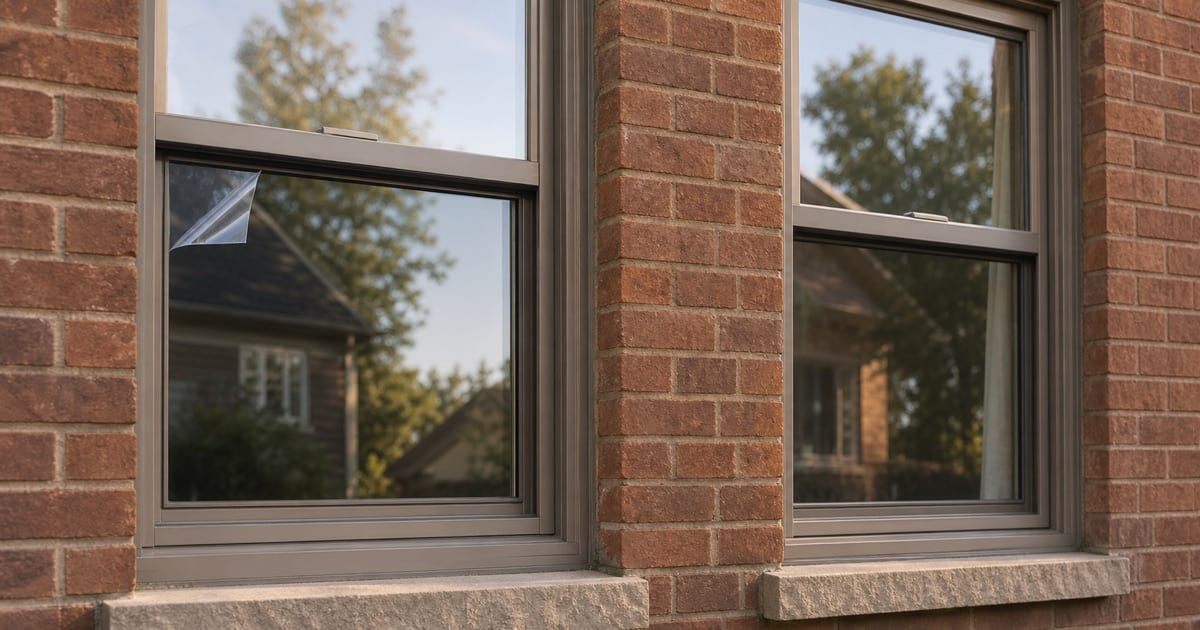
Unlike window replacement, security film is applied to the interior surface of your existing glass. No new windows are required. The installation process involves careful measurement, cutting the film to precise dimensions, and bonding it to the glass with water and a squeegee.
For a typical residential home, installation takes 1–3 hours depending on the number of windows and glass sizes. Most residential jobs can be completed in a single service visit. The film cures over 2–3 weeks, depending on temperature and humidity; during this time, small bubbles or cloudiness may appear, which is normal and clears as the film sets.
After curing, security film is nearly invisible. There is no visible tint or optical distortion. The glass appears normal from both inside and outside. The only evidence of film is its presence—the shattered glass will cling to the frame rather than falling or clearing.
Longevity is a key advantage of film. Quality security film lasts 10+ years under normal residential conditions. It resists UV degradation, does not yellow or degrade, and requires only standard window cleaning—no special maintenance or care. A single application is a one-time cost that protects your windows for a decade or more.
Frequently asked questions
How does security window film actually stop break-ins?
Film does not stop break-ins—it delays them. By holding shattered glass together and blocking the opening, film forces an intruder to spend additional time peeling the film away from the frame. Those extra minutes allow an alarm to sound, a resident to call 911, or a family to move to a safe room. Delay plus alarm plus a retreat plan is the three-layer security approach.
Does security film work on all types of glass?
Security film is most effective on single-pane and double-pane residential windows. The film adheres to the interior surface and works on any standard glass composition—clear, tinted, or decorative. The adhesion is the critical factor, and residential glass is ideal for bonding. Specialized glass (tempered or laminated) requires a professional assessment to ensure proper adhesion.
How long does security window film last?
Quality security film lasts 10+ years under normal residential conditions. It does not yellow, degrade, or require special maintenance. Standard window cleaning is sufficient. UV resistance is built in, so the film will not break down from sun exposure. The adhesion may weaken over many years, but a decade of protection is typical for residential installations.
Next steps: how to decide if film is right for your home
Every home and every exposure is different. Which windows on your property would benefit most from film? A professional assessment identifies ground-floor glass, high-exposure sliders, decorative sidelights, and other vulnerable points specific to your layout.
Ready to see which windows are the priorities? Book a free assessment. A technician visits, evaluates your entry points, and gives you a clear recommendation — no obligation. Written quote within 48 hours.
Related reading
- Patio Door Security: The Most Common Entry Point for GTA Break-Ins
- Sidelight Glass on Heritage Front Doors: The Entry Point Most Homeowners Miss
- Layered Family Safety Planning: Detection, Delay, and Retreat
- Break-In Prevention for Toronto Homeowners: What Police Actually Recommend
- Window Film vs. Window Replacement: Cost and Security Compared
- Security window film
- Door fortification