New Construction vs. Retrofit: Why Builder-Grade Doors Aren't Built for Security
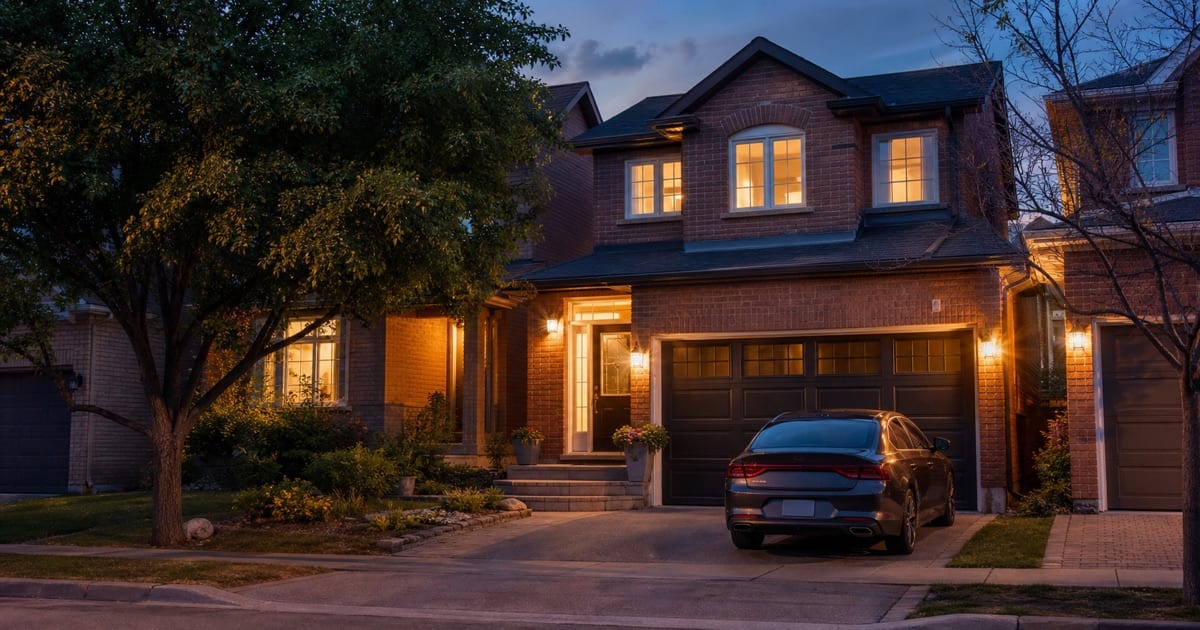
Most new homeowners assume their doors are secure because the home is new.
They're not. And it's not an accident.
New homes use builder-grade doors and frames optimized for cost and speed, not forced-entry resistance. A newly built home often has the same security vulnerabilities as a 30-year-old home — sometimes worse, because at least an older home might have had thoughtful security upgrades.
This post explains what builders install, why it fails, and why a retrofit approach sometimes makes more sense than you'd expect.
The New-Home Assumption
When people move into a newly built home, they often think: "It's new construction, so the doors and frames must be secure."
The assumption is reasonable. A new home is built by professionals, passes code inspection, and uses materials from reputable manufacturers. Surely the security is adequate.
The reality: builders optimize for Ontario Building Code minimums, not security performance. A door that passes code inspection is not necessarily secure against forced entry. Code compliance and forced-entry resistance are different things.
What Builders Install for Doors and Frames
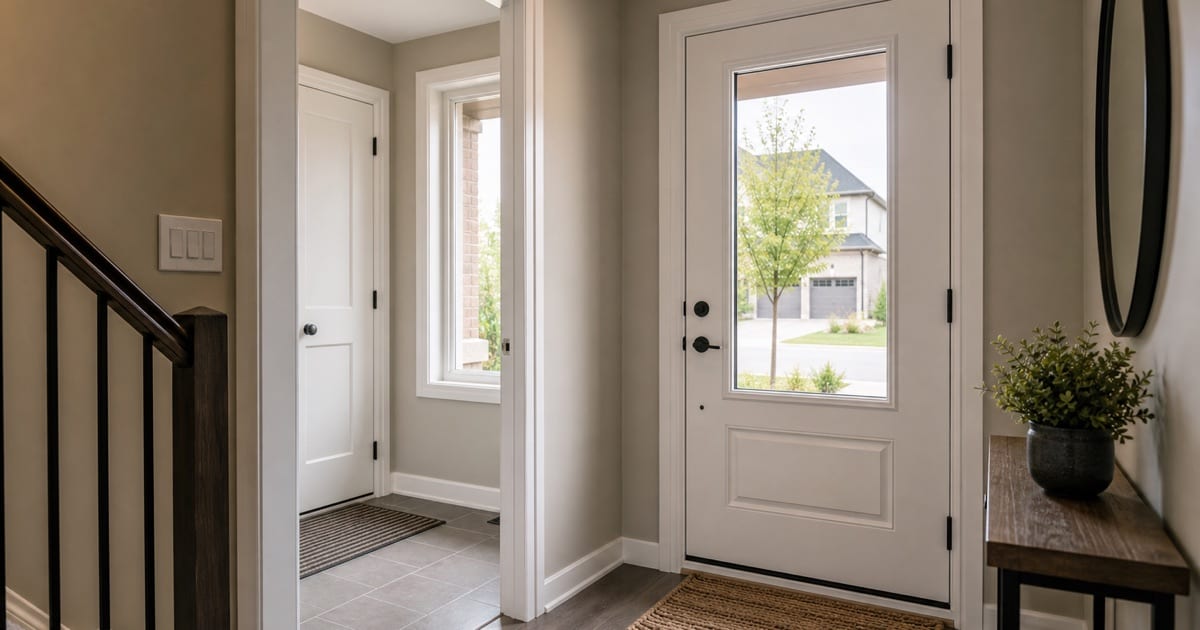
Entry doors: Often hollow-core or light solid-core, designed for interior use. You walk through them in a house; they're light and inexpensive. Installed as exterior doors in new construction, they're undersized for the job.
Latch hardware: Single-point latch or basic deadbolt (Grade 3 on the ANSI/BHMA scale — the lowest security rating). Meets code. Not built to resist a forced-entry attempt.
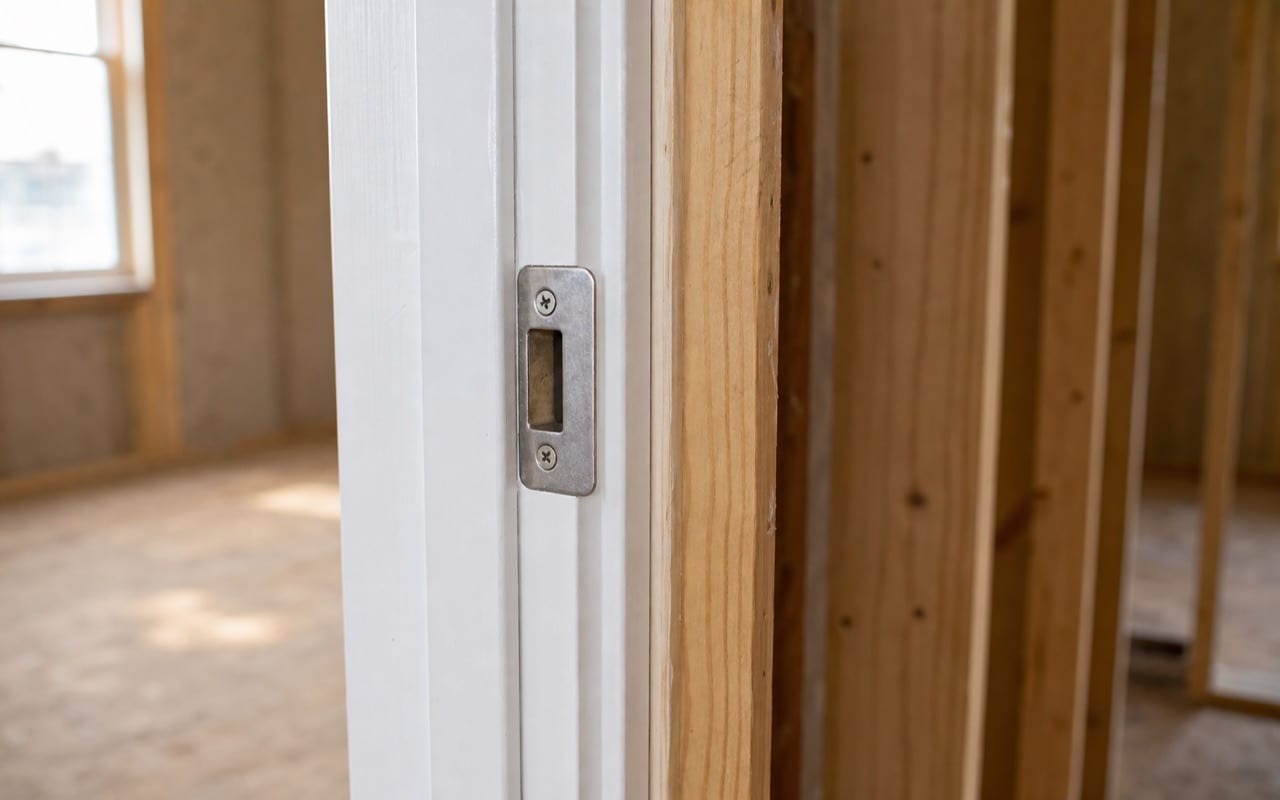
Strike plates: Standard residential-grade, 2.5" wide, held by short screws (1.5"–2") into the door frame. Meets code. Fails under force.
Door frames: Dimensional lumber (2x4 studs), fastened to the rough opening with short screws (1.5"–2"). These screws, when loaded by a kick or shoulder strike at the lock area, pull out of the frame under the shearing force. The frame yields, the door swings open.
Hinges: Standard residential hinges, sometimes with exposed hinge pins. Meets code. Not reinforced.
The result: An assembly designed to pass inspection and minimize cost. Not designed to resist forced entry.
This is consistent across major GTA builders. It's standard practice.
Why Builder-Grade Fails Under Forced Entry
When someone kicks a door next to the handle (the lock area), the force concentrates on the strike plate. The short screws holding the strike plate into the door frame experience shearing force. They pull out.
Time from first kick to door open: seconds. Often under three seconds on a light frame with short screws.
The frame itself has no reinforcement. Once the strike screws fail, there's no backup. The door swings open.
Hinges, if exposed and weak, can also fail. The door can sometimes be lifted from the hinge side on a light frame.
The latch becomes irrelevant. The frame is the failure point. And the frame is built to minimize cost, not maximize resistance.
A Retrofitted Older Home vs. A New Home
Here's a counterintuitive comparison:
A 30-year-old home with a retrofit: Heavy-gauge strike plate, structural screws anchoring into the wall studs, hockey-stick locking mechanism (like ARX Guard), tested to withstand 5,000+ pounds of force. Takes meaningful time to breach.
A new home with no retrofit: Builder-grade frame, short screws, standard strike plate, single-point latch. Takes seconds.
The newer home is often less secure.
Why New Homes Should Spec Security but Don't
Builders could specify security-grade components: multi-point locks, reinforced frames, heavy-gauge hardware. But:
- Cost: Security components add $200–$800 per door. On a home with 3–4 entry doors, that's $600–$3,200. Builders minimize this.
- It's not required: Code compliance is the floor. Builders build to the floor, not above it.
- Most buyers don't ask: Security isn't a top-of-mind buyer consideration (though it should be).
As a result, new homes ship with builder-grade security, and homeowners discover the weakness later when they're robbed or they move in and start thinking about it.
The Retrofit Value Play
For a new homeowner concerned about security, a retrofit is often more cost-effective than you'd expect.
A retrofit (like ARX Guard door fortification) directly addresses the failure point: the lock area where people kick. It replaces the short-screw strike plate with structural anchoring into the wall studs. Tested to withstand 5,000+ pounds of force.
Installation is straightforward. No door replacement needed. No frame replacement needed. Just the fortification hardware.
For a new homeowner: Retrofit your entry doors. Cost is lower than full-door replacement, and performance is higher than the builder-grade original.
For an older homeowner considering security: You can achieve the same security performance as a new home with security specs, at a fraction of the new-home security cost, with a retrofit.
When New Construction Actually Wins on Security
New homes have advantages, but security isn't typically one:
- Thermal efficiency: New windows and doors perform better on energy. Not a security advantage, but a quality-of-life advantage.
- Modern hardware: New hardware is updated, not original. Locks work smoothly. But they're still builder-grade.
- Air sealing: New construction air-seals better. Not a security advantage.
None of these translate to forced-entry resistance without additional specification. A new home could have superior security if the builder specified it. Most don't.
Assessment and Decision
If you're in a new home and wondering whether the doors are adequate:
- Check the strike plate. Is it a standard 2.5" plate held by short screws? (Likely yes.)
- Look at the hinges. Are they standard residential hinges, possibly with exposed pins? (Likely yes.)
- Ask yourself: Do I feel confident that this door would resist a determined entry attempt?
If the answer is no, or if you have any doubt, a retrofit directly addresses the weakness.
FAQ
Are new homes more secure than older homes?
Not necessarily. New homes use builder-grade components optimized for cost, not forced-entry resistance. An older home with a retrofit may be more secure.
What should I prioritize in a new home?
The entry doors. Have them assessed or retrofitted. The doors are the highest-impact entry point, and builder-grade doors are the weakest link in new construction.
Should I retrofit a new home?
If security is a concern or if you feel the doors are weak, yes. A retrofit is cost-effective and directly addresses the vulnerability without requiring door replacement.
Book a free door and frame assessment on your new home. A technician will examine your entry doors, frames, and hardware — and tell you whether your home is adequate or whether a retrofit makes sense. Written quote within 48 hours, no obligation.