Homes Backing Onto Trails and Ravines: What the Rear of Your House Reveals
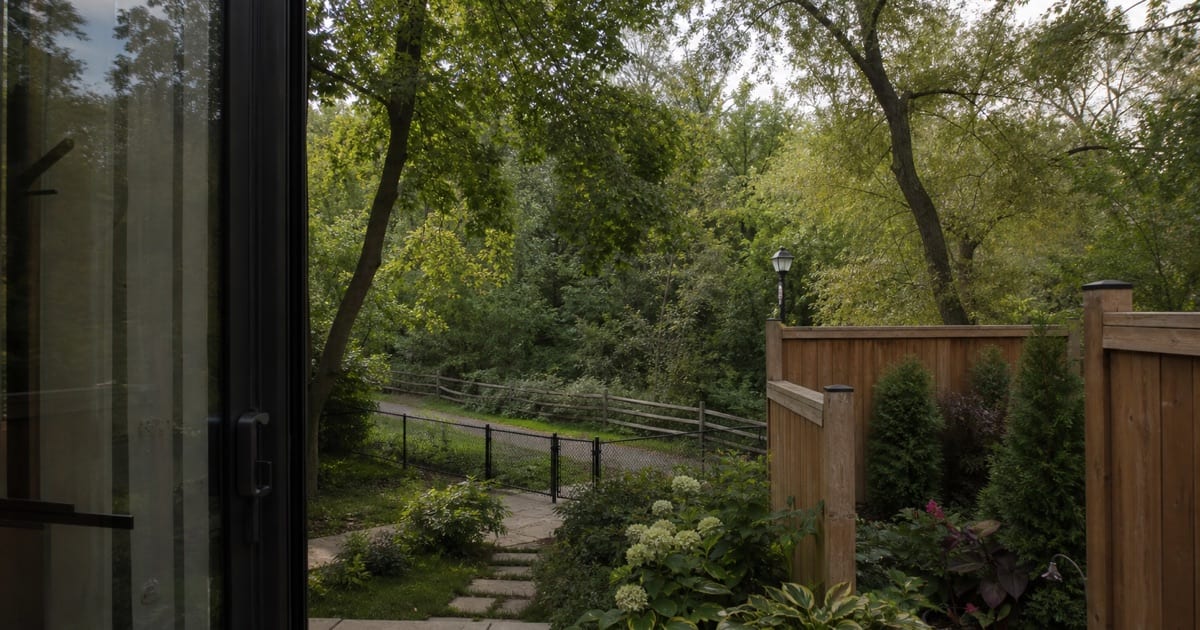
If your home backs onto a ravine path, municipal trail, or river corridor in the GTA, you have something most homeowners don't: a permanent observation point for your rear yard. That path is also a permanent feature. So the question isn't whether the trail is a security problem — it's what the trail means for the glass, doors, and entry points your house presents to that path.
This post is for homeowners in trail-adjacent properties (Rosedale, Lawrence Park, Don Mills, Scarborough Bluffs, or any suburban community where a ravine or greenspace runs behind the homes) who want a straightforward assessment of what rear access actually changes about their security and what they can do about it.
1. The Geography, Plainly Stated
Trail and ravine networks in the GTA are a feature, not a liability. They're valuable — they protect sightlines, add greenery to neighborhoods, and connect the city. Most days, a trail is exactly what it should be: a place where neighbours walk, runners pass, and families enjoy the outdoors.
The relevant security question is simpler: What does someone on the path see when they look at your house?
When a rear yard opens directly onto a public trail, the patio slider, rear French doors, and basement windows become observable from a path that has several properties you should know about:
- No traffic lights or passing cars — There's no constant movement that catches suspicious behavior.
- No neighbours watching from across the street — The trail side of your property is not overlooked by other houses the way a front porch is.
- No cameras — Most municipal trails don't have CCTV.
- Normal foot traffic — Someone walking slowly, stopping to look at your house, or approaching your rear door blends into the routine of the path.
This is geography, not crime prediction. It simply means the rear side of your house is observable from a route that has fewer of the informal deterrents (visibility, social oversight, consistent traffic patterns) that protect a front-facing entry.
2. What Makes the Rear of Your House Different From the Front
A front door gets attention because of where it is. Neighbors notice a stranger at the front porch. A delivery driver passes within 10 feet. A car pulls up. The front of your home is watched, even casually.
The rear of a trail-adjacent home is different:
- Shrub screening — Most trail-adjacent lots have perimeter hedges or trees, which is pleasant for privacy but means no one can see into the yard from the street or from other houses.
- No motion lighting — Many rear yards don't have automated lighting because the builders didn't prioritize it (you were facing the front toward the road).
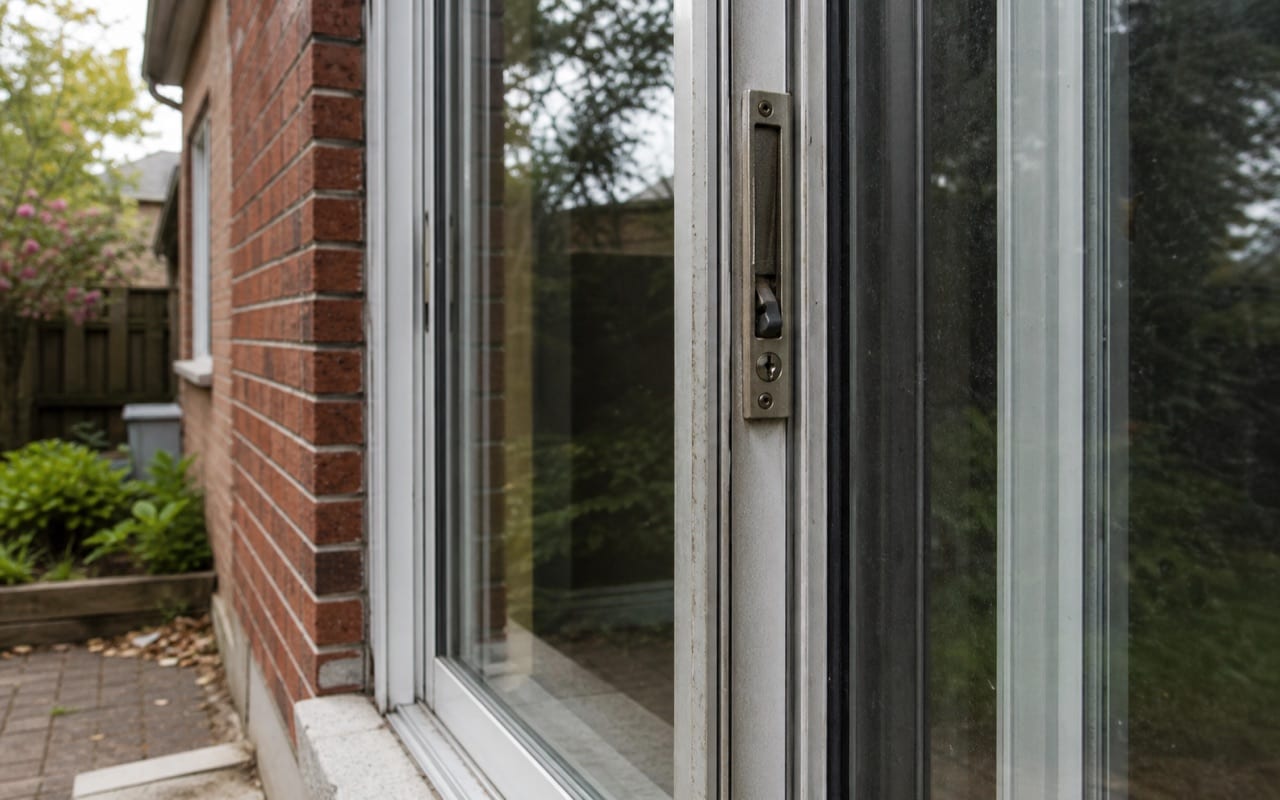
- Original construction glass — If your home was built in the 1970s-1990s, your patio slider probably has the original single-pane glass and a simple latch, not a modern multi-point lock.
- Single-point locks — Most patio sliders use a basic latch that engages a single point on the frame. A sliding door can be lifted out of its track or pried open at the latch.
As a result, the patio slider or rear French door is often the least-hardened entry point in the house. A ground-level basement window on a ravine lot may not have been updated in decades. These are the places where delayed entry is most at risk.
3. The Access Difference: Approaching From the Rear
Walking a trail from either direction is normal behavior. A person can move along the path for half an hour, stop at your property, observe the glass, check the lighting, and move on — and no one would flag it as unusual.
From the trail, someone can:
- Observe the condition and size of your rear glass
- Check your lighting patterns (porch lights on a timer? Motion lights? Nothing at all?)
- Assess whether the house appears occupied (cars in the driveway? lights on at night?)
- Notice if there's visible signage (alarm company signs, etc.)
This doesn't predict incidents. It describes why rear-facing glass and doors on trail-adjacent properties deserve the same attention as your front entry.
4. What You Can Check Right Now — No Products Required
Before you consider any upgrades, do a simple audit of your own rear yard:
Walk the trail behind your house and look back. What do you see? How clearly can you see into the yard? What's visible through the patio slider? This is the observation point we're talking about.
Check your rear porch lights. Are they on a motion sensor, on a timer, or not automated at all? A motion light doesn't prevent entry, but it raises the effort and removes the cover of darkness.
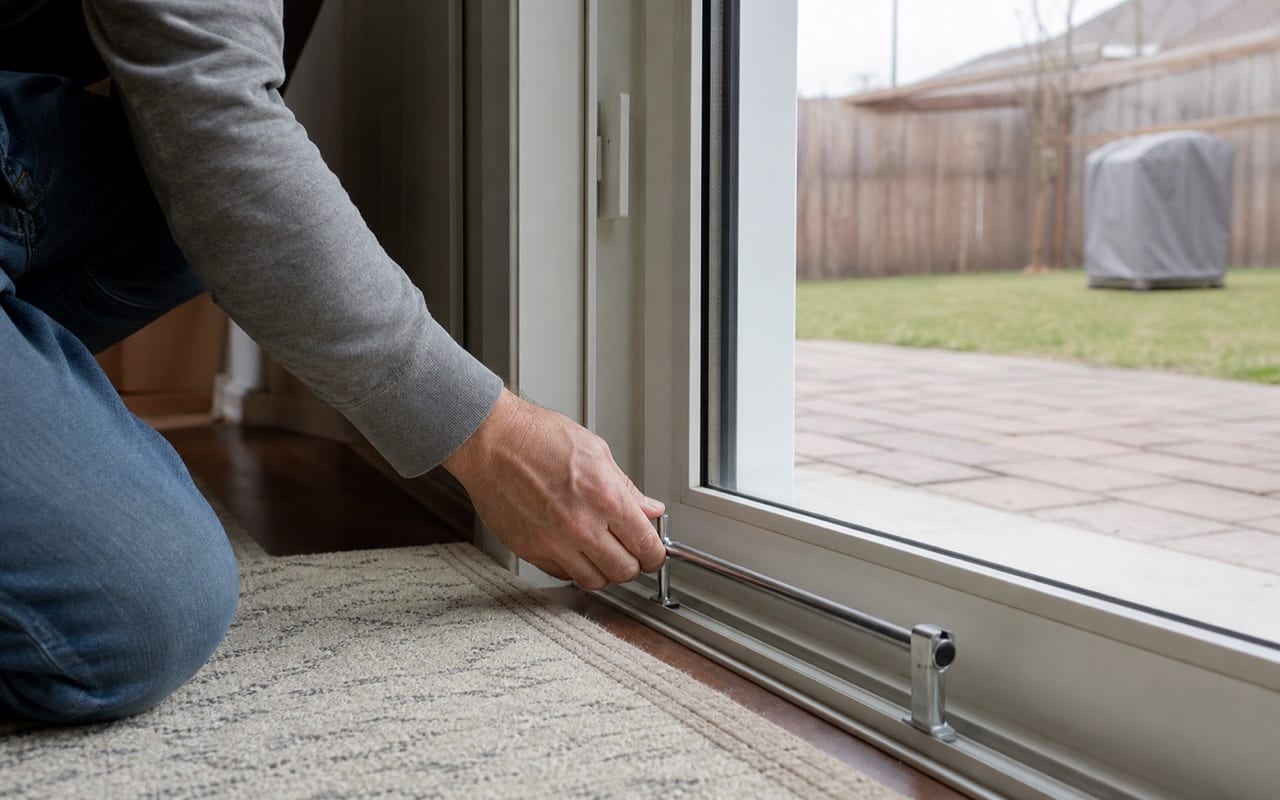
Is your patio slider secured with a secondary bar or pin? If not, it can be lifted or pried out of its track. A simple portable bar or pin (available at any hardware store for $10–20) makes this significantly harder.
Can the door between your garage and house be opened from outside if the overhead door is bypassed? This is a common secondary vector on properties with attached garages. Check the lock and frame condition.
Are rear shrubs trimmed? If shrubbery completely screens your yard from the trail, no one can see whether someone is in the yard. But if shrubs hide an approaching person from your sight, they also create cover. Trimming creates mutual visibility.
None of these steps require products. They're observations and low-cost fixes. Do them first.
5. Where Clear Guard Products Fit
Once you've audited your rear yard, you know whether the exposure matters for your property. If you decide you want to harden the rear, Clear Guard offers two approaches:
Security window film on patio glass and rear windows:
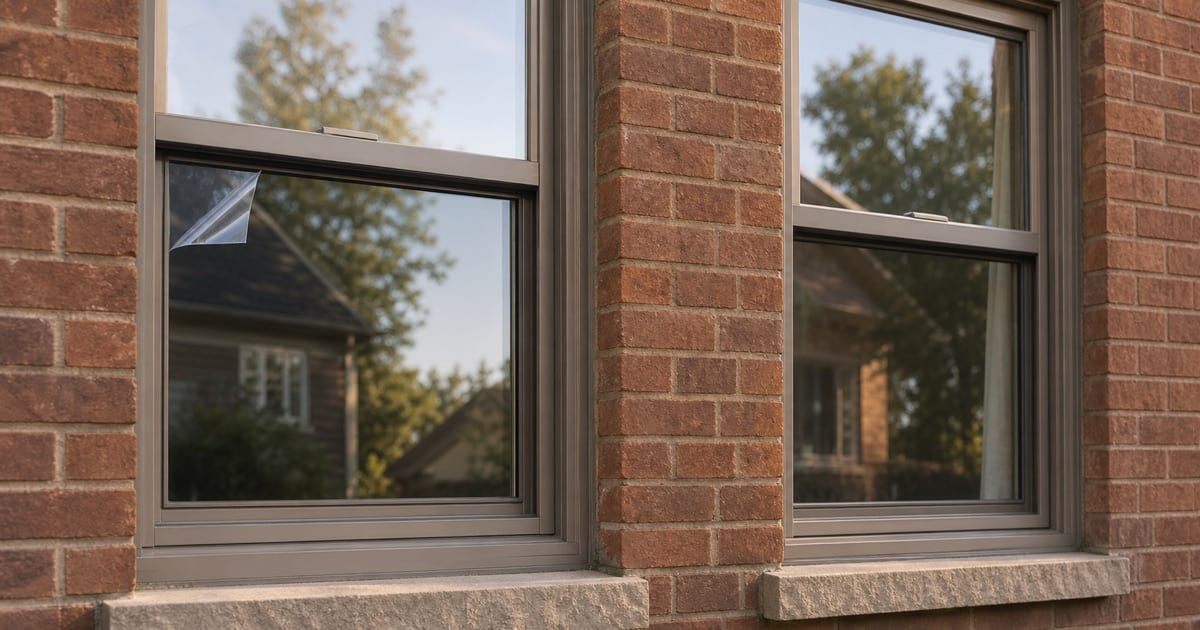
When a patio slider glass is struck or broken, security film holds the pane intact. Without film, the broken glass falls away — and the opening is clear for a hand reach-through to unlock the door from inside. With film, the shattered glass stays bonded to the frame. The reach-through is no longer possible.
Our security window film comes in two interior options: 8 mil (standard) for balanced protection, or 14 mil (maximum strength) for the strongest protection. Most homeowners choose to double film — applying film to both the interior AND exterior of the same pane. The exterior film is 7 mil (always recommended) and adds significantly more delay to a forced-entry attempt. This adds meaningful delay to the entry.
ARX Guard door fortification on rear doors and patio entries:
The weak point of a standard patio slider or rear door is the lock area — where you kick next to the handle. ARX Guard directly addresses this with an upper component that attaches to the structural frame above the door (the header) and a lower component that attaches to the threshold. A hockey-stick mechanism with a latch ties the door into the entire door frame. Optional: A second ARX Guard can be installed below for maximum strength. The door resists forced entry and adds resistance and forced-entry delay at the exact point where most break-ins begin. Available in multiple colors to match your hardware or door.
These are delay measures, not guarantees. They're not meant to stop a determined attacker indefinitely. They're designed to slow entry long enough that an intruder looks for an easier target or you have time to respond.
6. Assessment: What a Technician Looks At on Trail-Adjacent Properties
If you decide to get a professional assessment, here's what a Clear Guard technician evaluates on trail-adjacent properties:
- Rear glass size and frame condition — Original 1970s–1980s frames are significantly weaker than modern multi-point frames.
- Patio slider vs. French door vs. hinged garden door — Each has a different failure profile and requires different reinforcement.
- Basement windows at grade level — On ravine lots, these may be unfortified and vulnerable.
- Garage-to-house interior door — This is a commonly overlooked secondary entry vector.
- Alarm coverage — Whether your monitored system covers rear entry points, and what the response time is (Toronto Police average Priority 1 response is approximately 12–13 minutes).
A technician can also evaluate whether window film alone is sufficient for your patio glass, or whether door fortification makes sense for your rear entry. They'll prioritize based on what's most exposed.
Ready for a Professional Assessment?
If you're not sure what's visible from the trail behind your house, or what changes if you fortify your rear entry, a Clear Guard technician can walk the property with you. Assessments are free and take about 30 minutes. We'll walk the trail line, show you exactly what the exposure looks like, and explain what would close it.
Book a free rear-yard assessment. A technician visits, walks the trail, and tells you exactly what the risk looks like — and what would address it. No obligation, written quote within 48 hours.
FAQ
Does backing onto a trail make my home more likely to be broken into?
Not necessarily. Trail-adjacent properties don't have higher break-in rates than any other GTA neighbourhood. But they do have a different exposure profile: the rear of the house is observable from a public path. That means the rear glass and doors deserve the same attention you give your front entry.
What is the most vulnerable part of a trail-adjacent home?
In most cases, it's the rear patio glass and the door frame. A standard patio slider has a simple latch and tempered glass that shatters into small pieces when broken. The door frame is often original construction and held by a simple strike plate with a few short fasteners. Both can be hardened with film and fortification hardware.
Is an alarm system enough?
An alarm is one layer. A monitored alarm dispatches police when triggered, which adds response time (currently 12–13 minutes for Priority 1 calls in Toronto). But delay — the time it takes to get through the glass or door — is what matters most. An alarm system works best as part of a layered approach: lighting, locks, glass/door fortification, and alarm coverage.
Ready for a professional assessment? Book a free 30-minute evaluation of your rear yard.