Basement Windows and Grade-Level Glass: The Overlooked Entry Point
Most GTA homeowners do a security audit of their front door. Few think about the basement windows.
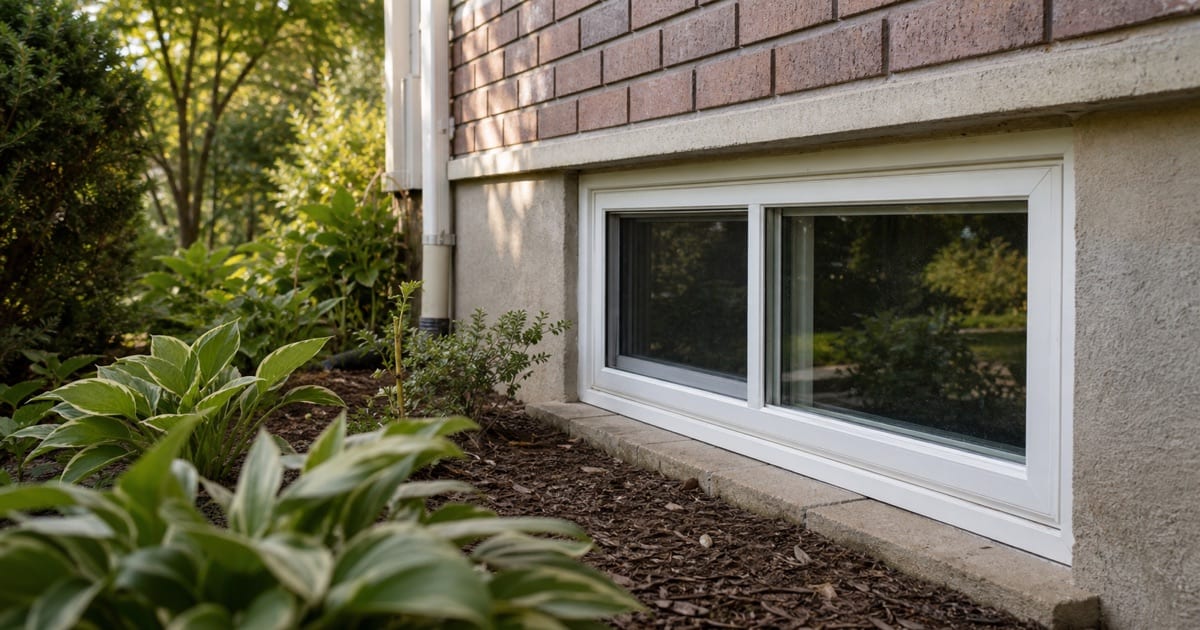
Basement windows are single-pane or original double-pane glass, at ground level, often overlooked in renovation budgets, and rarely filmed. They're visible from the street or a neighbor's yard. They're accessible. And when broken, they create an opening large enough for a hand and arm to reach through.
This post is for homeowners who have noticed original basement windows on their property and are wondering whether they're a real vulnerability — and what to do about it without replacing the windows.
Why Basement Windows Are Different
Basement windows were designed for light and egress, not security. They were never intended to resist forced entry.
Original construction (1960s–1990s): Most basement windows are single-pane or original double-pane annealed glass, set in aluminum or wood frames, with simple latches. The glass is thin (3mm–5mm for single-pane, standard thickness for double-pane). The frame is minimal — no reinforcement, no security consideration.
Overlooked in renovation: Because basement windows are not "living space" and not visible from the street-facing front of the house, they're often left unchanged during renovations. Renovation budgets prioritize main floors. The basement window gets skipped.
Grade-level placement: Basement windows are at ground level — accessible, observable, and within arm's reach of someone standing outside. There's no elevation advantage, no need for a ladder. A person can approach, observe the glass and frame, and attempt entry without significant effort.
Low visibility: Unlike a front porch where neighbors notice activity, a basement window on the side of the house or around the back is less observed. Someone trying the window goes unnoticed more easily.
This combination — original single-pane glass, simple frames, grade-level placement, low visibility — makes basement windows a high-priority entry vector on older GTA homes.
What Makes Basement Glass Vulnerable
Single-pane glass: Breaks cleanly on impact into large, sharp fragments. The pane shatters and clears away, leaving an open hole. Annealed glass (non-tempered) has no interlayer; there's nothing holding the fragments together.
Original double-pane glass: Standard double-pane units use annealed glass, not tempered or laminated. Both panes shatter on impact the same way. The result is the same: an accessible opening.
Simple latches: Most basement windows have a single thumb lock or slide latch on the interior. Once the glass is broken, the latch is within reach and can be forced or bypassed.
Poor frame condition: On older homes, wood frames may be rotted or glazing compound may have failed. Aluminum frames may be corroded or loose. A compromised frame makes the window even easier to breach.
The time factor: A basement window can be breached — glass struck, latch accessed, window opened — in seconds. There's no delay. There's no barrier once the glass is gone.
Hopper Windows: A Specific Case
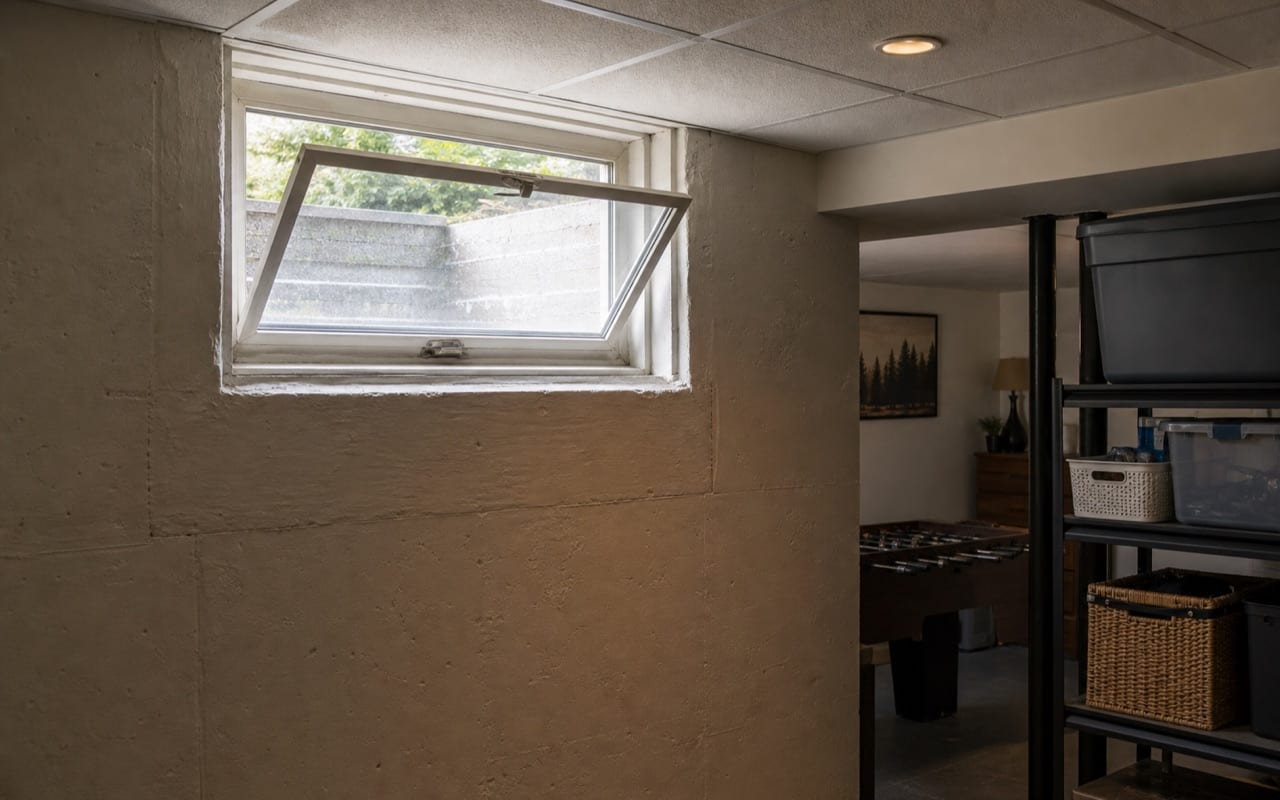
Hopper windows (hinged at the sill, opening inward from the bottom) are a specific vulnerability on basements.
When opened, they create a large opening at ground level. The latch mechanism is often a simple friction fit or single handle. If the glass is broken, the opening is larger and more accessible than a casement or fixed pane.
Basements with hopper windows as the primary or secondary egress are particularly at risk because the window is designed for easy opening — the mechanical advantage is already there for an intruder.
When Window Replacement Makes Sense
If the frame is rotted or the window is failing (fogging, failed seals), replacement may be necessary. If the window is a code-required egress, replacement with a code-compliant frame is the right call.
But if the frame is sound and the primary concern is the forced-entry vector, film is the more cost-efficient answer. You don't need to replace the window to protect it.
Why Security Film Works on Basement Windows
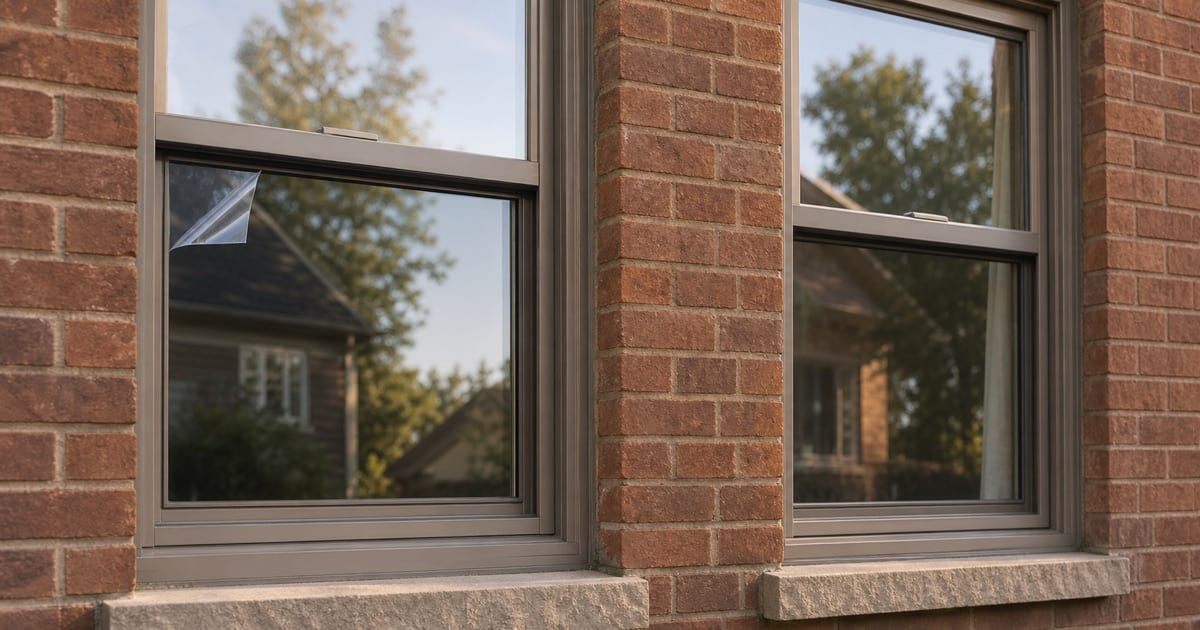
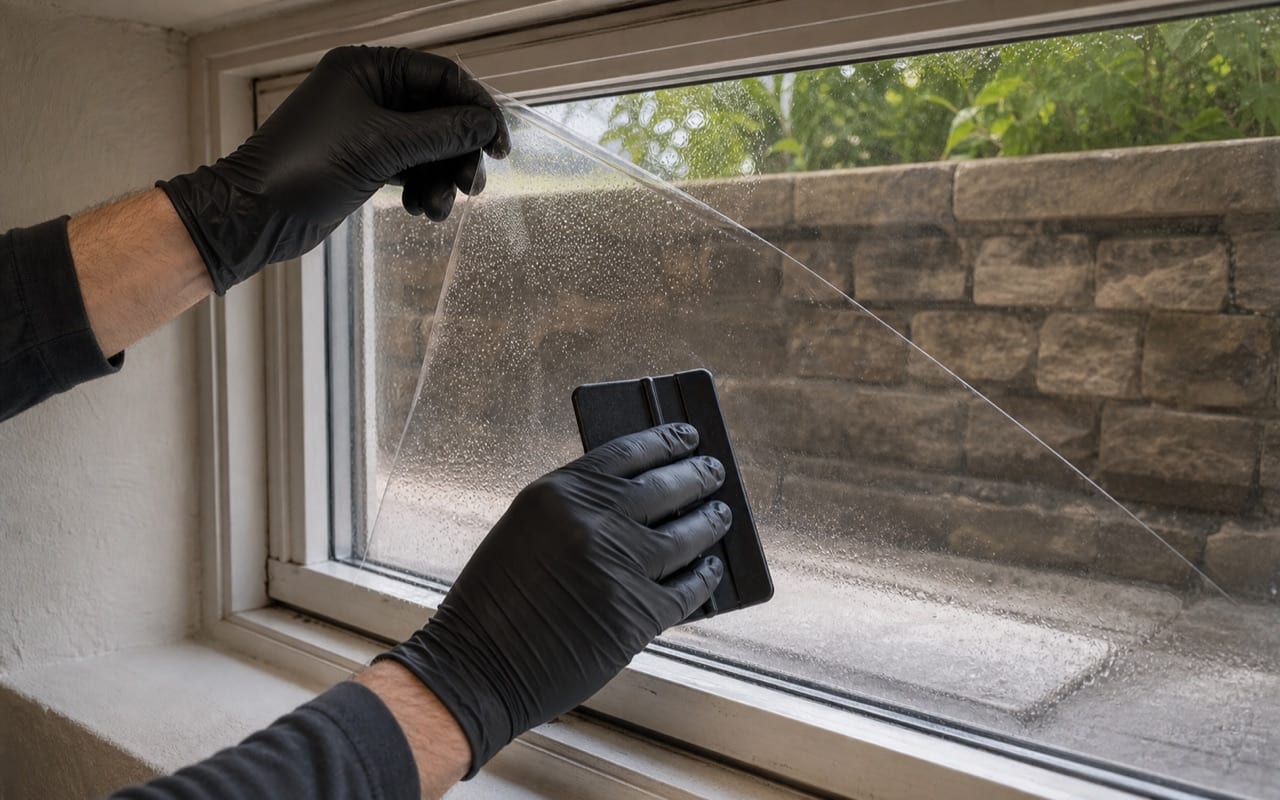
Security window film is a polyester laminate applied to the interior glass surface.
When the glass is struck, it shatters but the film holds the fragments together. The glass crazes and remains bonded to the frame. A hand cannot reach through a held pane — the film itself must be defeated, which takes additional time and force.
Interior 8 mil (standard) or 14 mil (maximum strength) provides the security layer. For basement windows, double filming — interior 8 mil + exterior 7 mil — provides maximum protection and delay, turning a seconds-level vulnerability into a minutes-level delay.
For a homeowner whose basement-window frame is sound but whose concern is the vulnerable glass, film directly addresses that vector in hours, not weeks, and at a fraction of replacement cost.
Film does not prevent a break-in. It adds meaningful delay. That delay is what matters — long enough for an alarm to trigger, a family to move, or an intruder to look for an easier target.
Assessment: What to Check on Your Basement Windows
Before you decide whether film is necessary:
- Knock on the frame. Is it solid or soft/rotted? (Wood frames should be hard and dry, not spongy or soft.)
- Check the glazing compound. Is the sealant cracked or missing? (If it's failing, frame repair should come before filming.)
- Observe the glass type. Is it single-pane, clear double-pane, or fogged (failed seal)?
- Walk outside and look at the window from ground level. How visible is the basement interior? How accessible is the window?
- Check the latch. Is it secure or can it be easily forced?
A Clear Guard assessment can determine whether frame repair + film is the answer, or whether the window itself needs replacement. But if the frame is sound, film is typically the straightforward choice.
FAQ
Are basement windows a security risk?
Yes, if they're single-pane, at grade level, and easily observable or accessible from outside. Original basement windows are designed for light and egress, not security. They're a high-priority entry vector, especially on older homes.
Can security film protect a basement window?
Yes. Film holds shattered glass together and prevents the hand-reach-through. This adds meaningful delay to a basement-window breach. It's the most cost-effective approach if your frame is sound.
When should I replace a basement window instead of filming it?
When the frame is rotted or failing, when the window is a code-required egress and needs structural compliance, or when the glass is already compromised (fogging, seal failure). If the frame is sound and your only concern is forced-entry resistance, film addresses that directly without replacement.
Book a free basement-window assessment. A technician will examine your glass type, frame condition, and the security priority of the window — and tell you whether film, replacement, or frame repair is the right call. Written quote within 48 hours, no obligation.